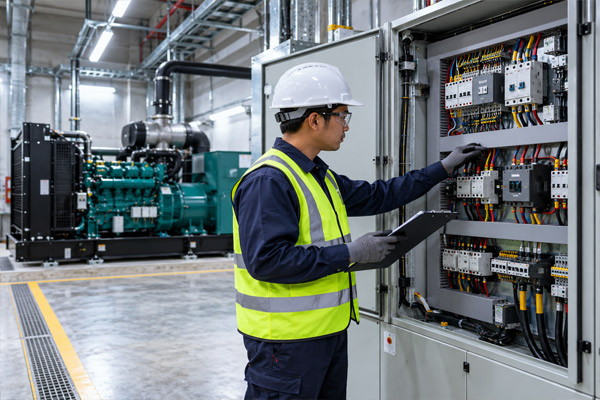
A Power Cut Test Tells You More Than a Panel Display
The new panel is mounted. Its screen is on. The generator starts when someone presses a button. Is the backup power system ready?
Not yet. The real test is what happens when the main supply fails while your site is working. The panel must detect the loss of power, signal the generator, and transfer the selected load once the generator is ready. It must also respond correctly when the main supply returns.
That is why AMF Panel Installation should be judged by the complete handover, not the appearance of the equipment. For a factory, hospital, warehouse, or commercial building, these are the questions to settle before approving the job.
Agree on Which Equipment Gets Backup Power
Begin with the load list. Which machines, lights, pumps, servers, or safety systems need generator power? Does the generator serve the whole building or only an essential circuit?
This decision affects the panel design, cable sizing, protective devices, and generator capacity. It also affects what your team can expect during an outage. If only essential loads are connected, other equipment will remain off even when the generator is running.
Ask the installer to show the final electrical drawing and identify the circuits supplied by the generator. If your operations have changed since the first site survey, review the load list again before commissioning.
Check the Generator and Panel Work Together
An AMF panel needs to communicate with the generator controller. Before installation, the contractor should check the generator’s start and stop connections, operating voltage, phase arrangement, and the signals used to show a fault or running condition.
Ask how the system behaves if the generator fails to start or its output is outside acceptable limits. A panel should not transfer a load simply because the engine is running. The electrical source must be suitable for the connected equipment.
Also discuss the delay settings. A brief dip in the main supply may call for a different response from a long outage. The right settings depend on your equipment and operating needs, so they should be explained and recorded at handover.
Make Space for Safe Operation and Maintenance
Where the panel sits matters after the installer leaves. Staff need clear access to read alarms and operate the controls. Service technicians need room to inspect it safely. The location should suit the panel’s environmental rating and be protected from conditions such as water exposure or excessive dust.
The electrical connection must be designed and completed by qualified personnel. Schneider Electric’s transfer switch guidance calls for a licensed electrician to perform wiring and installation. Ask the contractor who is responsible for the panel, generator connection, earthing, and final checks.
Before work begins, agree on the planned shutdown needed to connect the new system. This avoids a surprise interruption to production or business operations.
Ask for a Demonstrated Transfer Test
A good handover includes a witnessed test, with the method agreed in advance to protect your site’s operations. Ask the commissioning team to demonstrate how the system responds when the main supply becomes unavailable and when it returns.
During the test, record whether:
- The panel detects the supply failure
- The generator receives a start command
- The load transfers only after generator power is acceptable
- The panel shows the correct source and any alarms
- The load returns to mains power as designed
- The generator completes its programmed running and stop sequence
Testing procedures vary by equipment model. Manufacturer guidance includes functional tests after transfer switch installation, so ask for the test results that apply to your actual panel.
An AMF panel does not, by itself, promise power with zero interruption. If even a brief break could affect equipment, discuss that requirement during design rather than discovering it in the first outage.
Take Home the Settings and Support Details
Before signing the handover sheet, request the final drawing, equipment manuals, panel settings, test record, and warranty information. Ask the installer to label the controls and show your staff how to read common alarms.
Find out whom to contact if the generator starts but the load does not transfer. Confirm who will maintain the panel and whether routine testing is part of the service agreement. These details matter months later, when the people present at installation may no longer be on site.
Unique Power Solutions lists AMF panels among its generator control components and offers turnkey power project services that cover installation, testing, and commissioning. When requesting a proposal, share your generator details, site load, location, and required handover tests so the scope can be discussed clearly.
Conclusion
A panel is ready for service when the complete backup system has been checked and your team understands its operation. Confirm the supported loads, compatibility, site conditions, transfer sequence, and documents before accepting the installation. A witnessed test turns a promise on a quotation into something you can see and record.
Frequently Asked Questions
Possibly. The installer must check the generator controller, starting connections, electrical output, and required signals before confirming compatibility.
Ask for the panel specification, site survey, cables and connections, installation work, protective equipment, commissioning tests, documentation, and warranty terms.
Only equipment connected to the designed backup circuits can receive generator power. A brief interruption may occur during starting and transfer.
Connecting and testing the system may require a planned shutdown. Ask the installer to agree on its timing and expected duration before work begins.
Request a witnessed functional test and a written commissioning record showing the response to mains failure, generator operation, and mains return.
Changes may be possible, but a qualified professional must check the generator capacity, panel rating, protection, and wiring before adding loads.
Request final electrical drawings, manuals, panel settings, test results, warranty details, and a contact for faults and future maintenance.